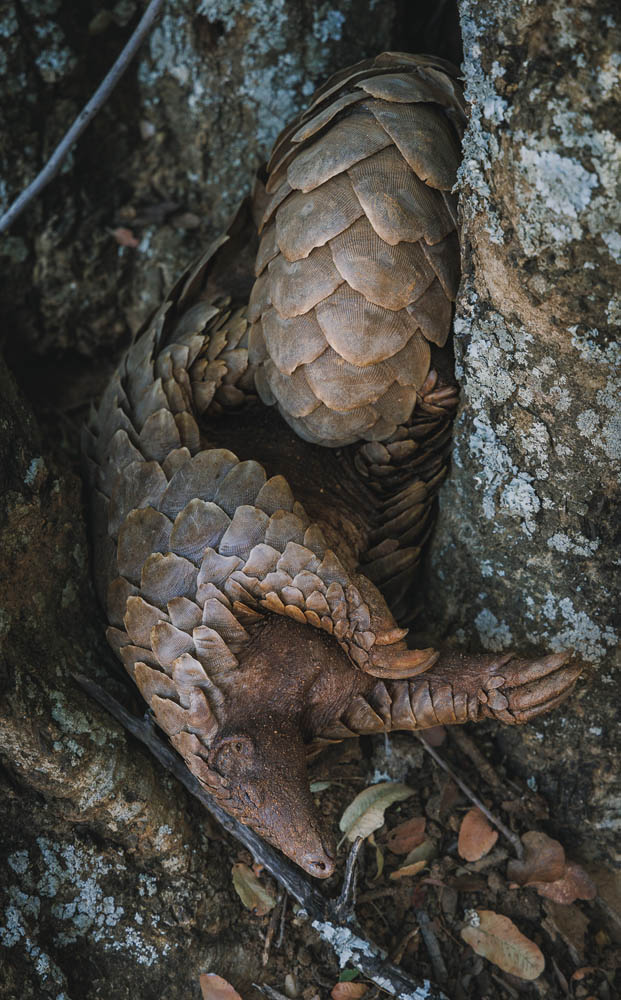
Threats to Pangolins
“Without urgent conservation action at a global scale, all eight species of pangolins face extinction,”
– Matthew H. Shirley, co-chair of the International Union for Conservation of Nature’s (IUCN) Pangolin Specialist Group.
While large predators, starvation, fires and possibly disease pose a threat to wild pangolins, the vast majority of threats facing pangolins today are of a human origin:

Domestic trade across Africa
All four African pangolin species are widely used in Traditional African Medicines, known locally in South Africa, as Muthi. There are also a number of traditional beliefs regarding pangolins: Some cultures believe that pangolins are the greatest gift that can be bestowed on a person of authority and in the past many pangolins were presented to tribal chiefs and minsters as a sign of respect. This tradition is still practiced in parts of Africa. Around 0.4 – 2.7 million individuals are hunted and traded annually in local to regional bushmeat markets in central African forests. These markets in central Africa seem to also be a feeder market for the international trade. Some cultures believe that seeing a pangolin during the day indicates that a drought is imminent, and the only way to ward off the drought is to sacrifice the pangolin next to a river. Other cultures use pangolin fat to ward off evil spirits while still others believe that carrying a pangolin scale or a vial of pangolin blood will protect you from danger. Some cultures use pangolin scales as part of their traditional dress.
In Central and West Africa pangolins are predominantly used as a source of food. Many villagers in these areas view pangolins as just another variety of protein or bushmeat, and they are hunted as such. Some cultures hold pangolin meat in high esteem and serve pangolin meat to dignitaries or on special occasions. After being captured and killed, the pangolins are roasted over a fire or boiled to remove the scales, which are discarded, and the meat preserved.
Professor Raymond Jansen was interviewed by Alexis Kriel in the lead-up to COP17 in October 2016. He gives a window into the South African paradigm – including traditional healers, tribal medicine and the trend towards the commercial trade in pangolins.


International trade
Until recently the international trade has focused predominantly on the Asian pangolin species. The recent precipitous decline in these populations and weak or ineffective law enforcement in Africa, in combination with increased trade agreements between Africa and Asia, has resulted in the African pangolin species being increasingly targeted to supply the insatiable Asian demand. Most illegal exports contain pangolin derivatives (whole pangolin carcasses are rare), and are destined for China and Vietnam, although significant seizures have also been made in various European countries. China and Vietnam are believed to be the main end-user countries with the European countries mainly acting as conduits, although some of the pangolins imported into Europe as bushmeat are destined for expatriate communities living in these countries. The illegal international trade is likely to become the most significant threat to African pangolin species in the near-future.
Habitat Loss
Habitat loss is a significant threat to pangolins – across Africa. With the burgeoning human population, there is an ever-increasing number of people relying on an ever-dwindling supply of natural resources. Improved logistics and infrastructure in expanding human settlements add to the human-wildlife conflict and contribute to the ongoing demise of endangered species. The building of new roads, does not only fragment habitat, it also creates inroads into previously inaccessible areas, with few legislated controls and unsustainable harvesting of natural resources. In addition to legal concessions, there are networks of illegal logging concessions, that operate with impunity and add to the already extensive and uncontrolled extraction of timber from ancient rainforests, often cutting down 200 year-old trees that will never be replaced. This is especially a threat to black-bellied pangolins that traverse across the tree canopy at a height of between 50 to 100 metres. Mines, agriculture and human settlements result in significant habitat loss – especially in West and Central Africa. The best way to conserve these habitats, and in turn pangolins and other threatened species, is by supporting local ecotourism ventures as well as the organisations that specialise in these areas, with expertise in conservation throughout Africa.

Road mortalities
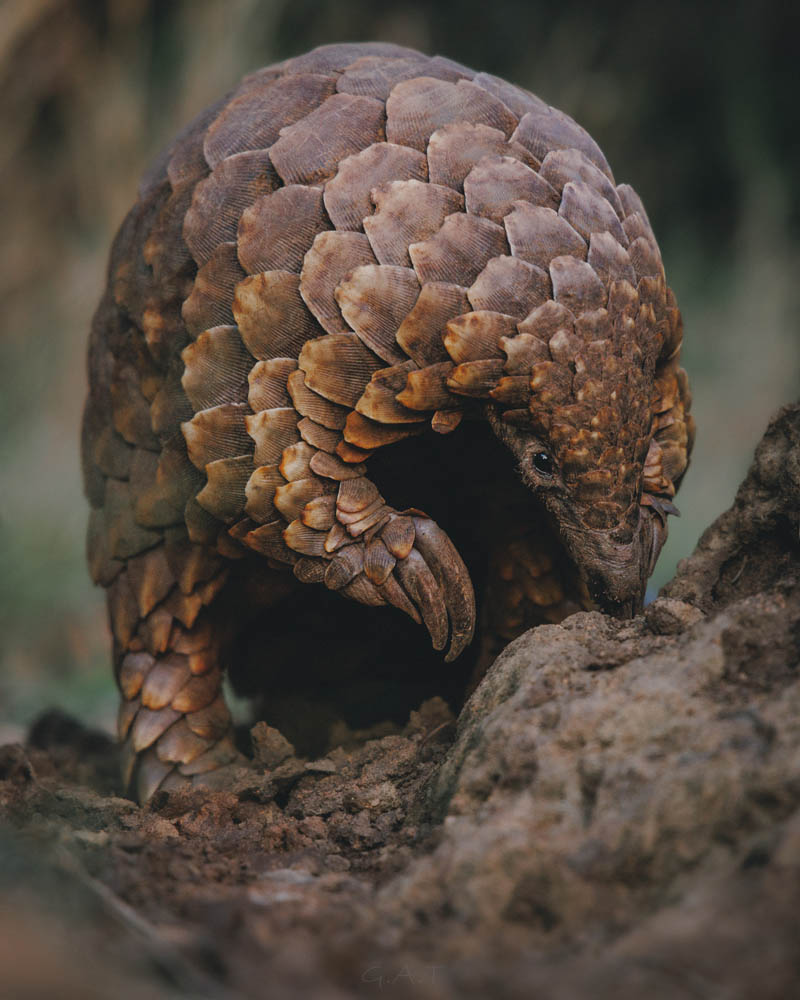
Given the encroachment on natural habit areas and the building of roads, pangolins are accidentally killed while crossing roads, although the extent of this threat is difficult to determine as carcasses are often removed by scavengers, interested persons and suppliers of the traditional medicine trade. One estimate has it that nearly 300 pangolins are killed on roads in South Africa alone each year.
Electrified fences
Electrified fences pose a significant threat to pangolins, especially in southern Africa where these structures are pervasive and widespread. It is estimated that between 440 and 1190 pangolins are inadvertently killed on electrified fences in southern Africa every year: that is one pangolin electrocuted per 10–30 km of electrified fenceline annually. These electrocutions are accidental and relate to the pangolin’s behaviour of walking on its hind legs with the front legs and tail held off the ground and acting as a counter-balance. The belly is not protected by scales and when the pangolin’s belly comes into contact with an electrified wire (at exactly the corresponding height) the shock is perceived as a threat. Pangolins only have one defence when faced with a threat – and that is to roll into a ball, often inadvertently curling around the electrified wire in the process. Each successive shock causes the trapped pangolin to curl ever-tighter around the wire until it succumbs to either electrocution or exposure.
The APWG is involved and invested in research to improve electrified fence designs to make them more pangolin-friendly, while maintaining their overall effectiveness. One such design change is to raise the height of the lowest electrified strand to at least 40 cm above the ground. Unfortunately, this means that many carnivores, including damage-causing predators, can crawl underneath the electrified wire and therefore it is not suitable for game farms with predators or livestock farms that suffer high livestock predation rates. Another design that has shown promise is to modify the offset tripwire to include three strands (live : earth : live), with the lowest tripwire set at about 5 cm above the ground and the highest strand set at 30–40 cm. Initial tests with this design resulted in a more than 30% reduction in mortalities, although further research is required.