The following article extract was published by the Daily Maverick and was written by Tessa Knight.
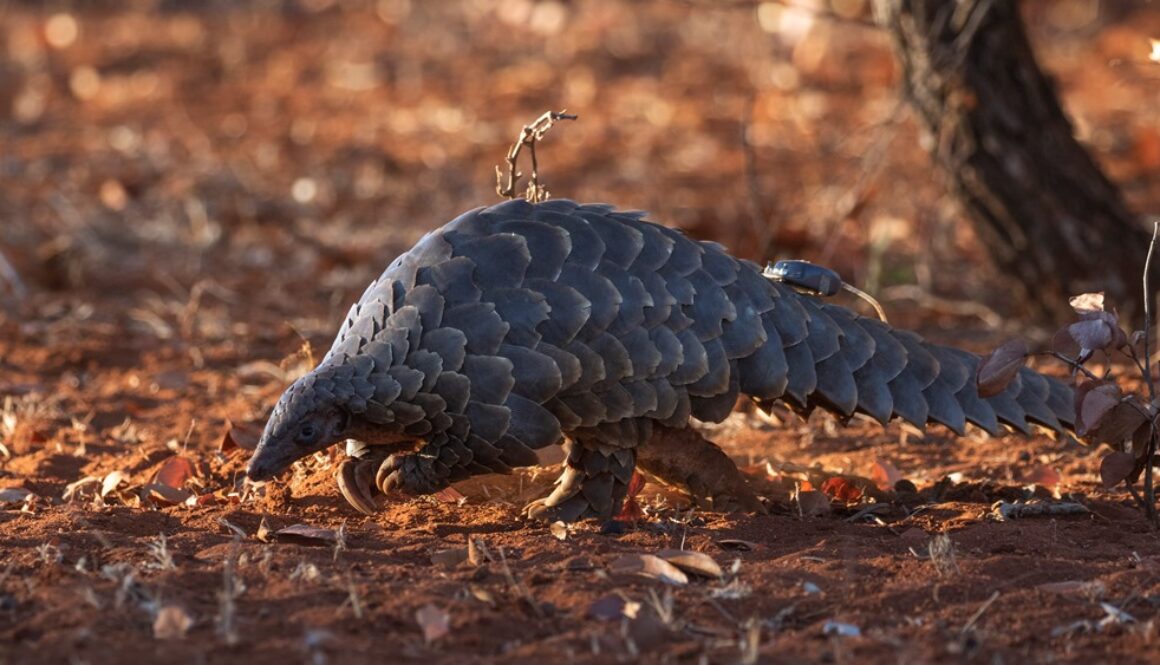
A policy document has been released that assesses gaps in the strategies and policies used to protect the most trafficked mammal in the world — the pangolin.
“A question of scales”, a report compiled by Richard Chelin for ENACT (Enhancing Africa’s response to transnational organised crime), emphasises the need for urgent action to protect the animal known as the scaly anteater.
Pangolins are the most trafficked mammal in the world. Markets in Asia have a voracious appetite for the solitary creatures and after decimating the Asian population, African numbers are decreasing at alarming rates.
The rest of the article is behind a paywall, and can be accessed here
The following article was written by René de Klerk and published by Safarinews.org
During August, news of a poached pangolin reached the team at the Johannesburg Wildlife Veterinary Hospital (JWVH). While the rescue of live pangolins from the illegal trade in South Africa during sting operations is nothing new, this case was different. Although the animal was alive, poachers had sealed its fate by removing its claws.
A pangolin confiscated from poachers did not survive, despite intervention. Photo: Nicci Wright
The JWVH team named him Fortunate, and tried their best to save the animal, with experienced vet
Dr Karin Lourens treating him under anaesthetic in the theatre. He was monitored to determine whether his most important tools, his claws, would grow back – if they did, he could return to the wild.
Unfortunately, after three months of care there was no sign of regrowth, and other aspects of the pangolin’s health continued to deteriorate. Fortunate reached the point of no return and the difficult decision was taken to humanely euthanase him. Without claws he would never feed on his own again, and pangolins are unable to survive in captivity.
Fortunate was yet another pangolin lost in the battle against poaching.
“Because of stress, their immune systems are compromised and they often die”
According to Nicci Wright, wildlife rehabilitation specialist at JWVH and director of the African Pangolin Working Group (APWG), more than 68 tonnes of African pangolin scales have been intercepted in Asia’s illegal trade, this year alone. This equates to approximately 300 000 pangolins.
“In Southern Africa, pangolins are poached and sold alive on the illegal trade,” Wright says. The APWG assists the South African Police Service (SAPS) and environmental law enforcement officers when sting operations are carried out to intercept poachers. JWVH and APWG are mandated to treat, rehabilitate and release pangolins in South Africa. These two organisations, in collaboration with the Humane Society International – Africa, work hands-on with all pangolins that are confiscated in South Africa.
For security reasons, the animals are not kept on site at JWVH, and a great deal of time and effort goes into the rehabilitation of survivors. Since the hospital was established in 2016, the team has treated nearly 60 pangolins. “There are probably 10 times more that we are not getting to,” Lourens says.
Pangolin found during a sting operarion. Photo Nicci Wright APWG
When confiscated, these animals have often been without food and water for weeks, and their condition is dire. “They always have severe health issues because they have been kept without food and water, often in a sack, or wired into baskets unable to move. We have even found them screwed into closed speaker boxes and bolted into wheel wells of vehicles,” Wright adds. “They urinate and defecate in the same space and inhale the same air. Because of stress, their immune systems are compromised and they often die no matter what we do,” she explains.
Initially only 50% of pangolin patients treated at JWVH survived, but with more knowledge and experience the survival rate is now 80%. Pangolins remain the most expensive animal treated at the hospital, costing R1 000 per day. After release, the costs do not stop.
There is a strict release protocol, which involves intense monitoring. Every pangolin is fitted with VHF and satellite telemetry tags, which cost APWG in excess of R20 000 per pangolin per day.
Apart from treating and releasing pangolins, JWVH and APWG provide evidence for SAPS dockets, which helps build the chain of custody for the court case against poachers.
“In the beginning they were given a R500 fine because it was classified as stock theft,” says Lourens The longest sentence to date has been eight years. “This is because of the continued work that the APWG does with various provincial law enforcement departments, magistrates and prosecutors,” Wright says.
Pangolin scales are used in traditional medicines, and they are also seen as a delicacy. African pangolin species are being targeted by syndicates because the Asian pangolin numbers have been severely reduced.
Poaching pangolins from the wild is mostly orchestrated by international syndicates, Lourens says.
“Pangolins are so highly trafficked, we never know if it will be the last one we receive for treatment,” she adds.
Provincial police spokesperson Colonel Lungelo Dlamini said police received information on 6 October from a member of the public that he had been contacted and offered a pangolin.
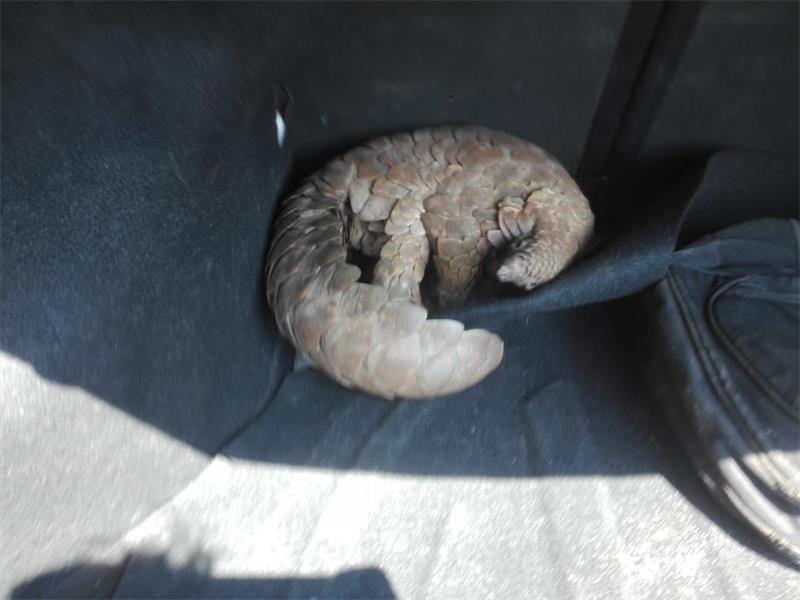
“On the following day an operation was conducted and arrangements were made to meet the seller(s) at the Kolonnade Retail Park in the Sinoville policing area. A car was identified where the pangolin was held,” Dlamini explained.
A team of police officers from different units arrested four out of five suspects.
“The pangolin was found in the boot. Suspects were detained at Sinoville SAPS. They will be charged under the National Environmental Management Biodiversity Act 10 of 2004 section 57 (1) to sell, trade and possession of an endangered species animal without a permit.”
Professor Ray Jansen from TUT and founder of the African Pangolin Working Group said the pangolin, which was rescued this morning, was doing all right.
“He is very weak, thin and dehydrated. He has also lost a lot of white blood cells,” Jensen told Rekord.
Because the pangolin, an 8.8kg male, was rescued outside Kolonnade Retail Park, it has been named Zambezi.
Jansen said that although Zambezi is doing much better, he is not out of the woods.
“He has a 50/50 chance. I am very worried about him,” he said.
Jansen said they have been trying to trace the poachers – allegedly Zimbabwean nationals – since the middle of September.
Four poachers were arrested this morning at the Kolonnade Retail Park for smuggling a pangolin.
One of the five poachers managed to flee the scene on foot and is still at large.
The following article extract was published by the Daily Maverick and was written by Tessa Knight.
August saw two breakthroughs in pangolin protection: China announced traditional medicines containing pangolin will no longer be covered by insurance, and an Mpumalanga court handed down the harshest sentence for pangolin poaching to date.
Vincent Nyathi has set a precedent for pangolin poaching after he was sentenced to eight years behind bars for keeping one of the endangered mammals in a drum.
According to advocate Ansie Venter, the animal was found after authorities received a tip-off that Nyathi, 32, was keeping a live pangolin in a back room in his mother’s house.
“It was found without food or water and definitely wasn’t kept as a pet.”
The rest of the article is behind a paywall, and can be accessed here
Use of pangolins for bushmeat and African traditional medicine, particularly in poor communities, is complicated by the growing, unsustainable demand for scales from Asia. Alexis Kriel investigated for Oxpeckers.org
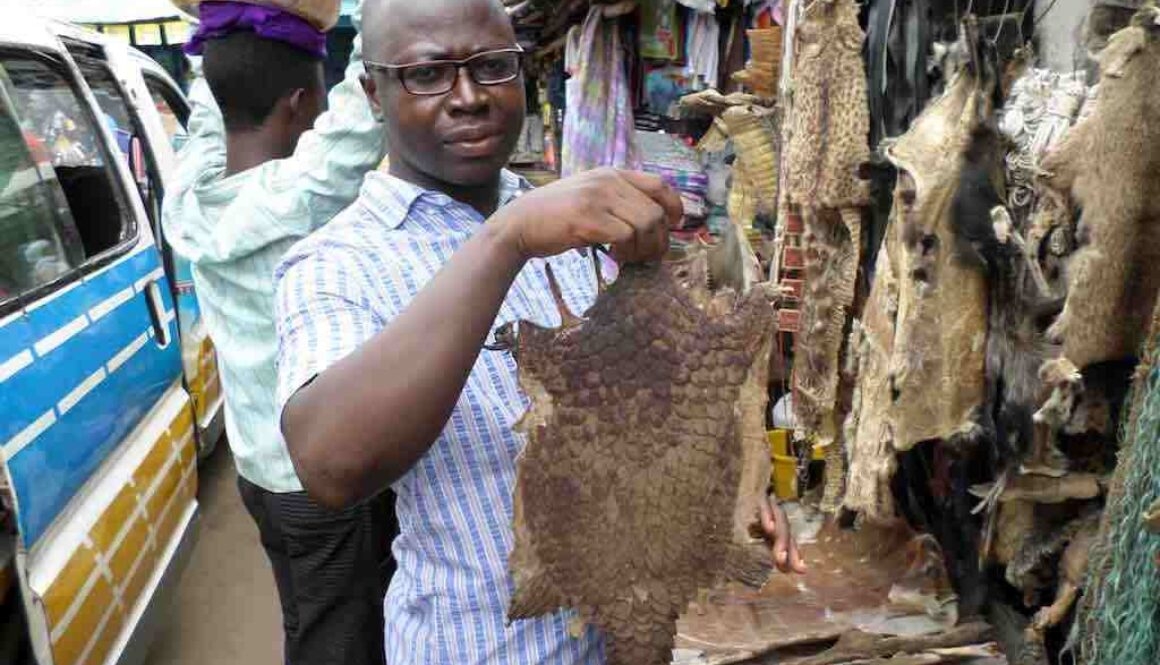
(Pictured above: A full pangolin skin with all the scales intact, for sale in an African ‘muthi’ market. Photo courtesy African Pangolin Working Group)
A spirited video clip of martial arts guru Jackie Chan and three animated Kung Fu pangolins sends a strong message to Chinese consumers that these animals are protected by law. The clip ends as the heroic pangolins assist Chan in dumping a poacher in the trash and a tagline that has become synonymous with these celebrity-driven campaigns: “When the buying stops, the killing can too.”
WildAid, which conducts extensive surveys to calculate positive behavioural change, says campaigns like this have helped reduce shark fin sales in China by 80% since 2011.
To raise public awareness about the illegal wildlife trade, the organisation has enlisted more than 100 celebrities, including Prince William, David Beckham and Richard Branson. Its ambassador for the shark fin campaign was Yao Ming, a retired professional basketball player who is one of China’s best-known athletes.
According to Peter Knights, WildAid’s founder, these campaigns have helped to reduce the global consumption of wildlife products, with ivory sales down by more than two thirds in Asia, by a third in Kenya and cut in half in Tanzania from 2017.
For pangolins, however, curbing consumption is harder, says Knights, particularly since the scales can be sold legally in China for traditional medicine through state-authorised hospitals.
In 2016 all eight species of pangolin were listed on Appendix I of the Convention on International Trade in Endangered Species (CITES), making international trade in them illegal. But that does not stop China from trading them domestically.
China’s annual domestic use amounts to roughly 25 tons of pangolin scales for medicinal purposes – the equivalent of up to 50,000 pangolins, according to the China Biodiversity Conservation and Green Development Foundation.
With Asian pangolin populations under pressure from poaching and habitat loss, these mammals are being sourced elsewhere. Since the beginning of 2019 customs officials have confiscated more than 50 tons of African pangolin scales en route from Nigeria to Asia.
Knights believes the most powerful actions for protecting pangolins worldwide would be for Chinese traditional medicine associations to remove pangolin scales from their pharmacopeia and for China to ban domestic use of scales and promote existing alternative treatments, as it did for rhino horns.
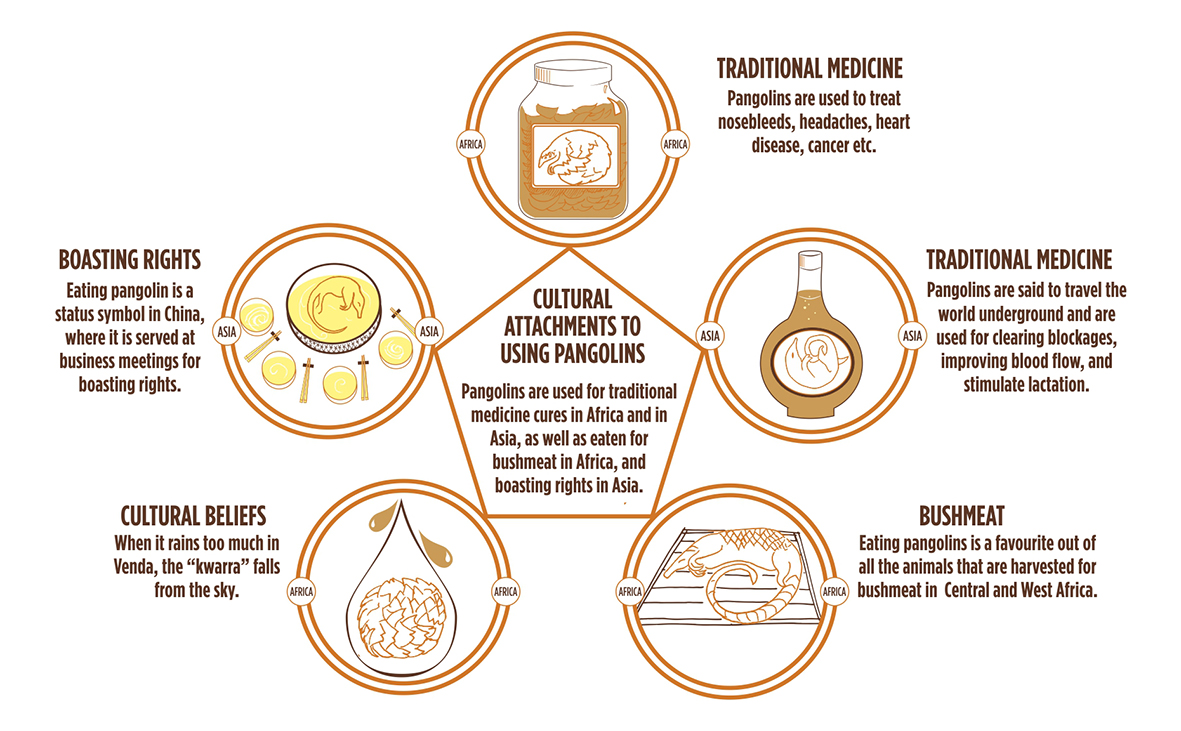
Pangolins used as a commodity in cultural belief systems and for food is driving this species to extinction. Graphic: Lori Bentley
Behavioural change
Knights is currently travelling in Africa, where WildAid’s “behavioural change” campaigns have started rolling out. Similar to the successful Asian film clips, these campaigns use local celebrities, such as athlete Eliud Kipchoge of Kenya, actress Anne Kansiime of Uganda and Springbok rugby player Tendai “Beast” Mtawarira of South Africa, under the banner “Poaching steals from us all”.
He says WildAid’s emphasis in Africa is on promoting sustainable tourism, encouraging local people to visit their national parks and for there to be greater value in wildlife tourism as opposed to poaching. These campaigns have been specifically adapted to the African context, with a strategy to reduce human-wildlife conflict and encourage public and political support for conservation.
There is a very real threat to pangolin populations at the current level of use – for bushmeat and African traditional medicine (muthi), particularly in poor, under-resourced communities. This demand is specific to the trade in Africa but complicated by the growing, unsustainable demand for pangolin scales from China.
According to the World Health Organisation (WHO), traditional medicine is the first level of contact many people in developing countries have with healthcare due to inadequate modern medical facilities and affordability when these are available. The WHO estimates that 80% of Africa’s population uses traditional medicine either on its own, or in combination with Western medicines.
Malokisa Mukondeleli, who grew up in King Toni Mphephu Ramabalana’s royal compound at Dzanani Khoroni in Venda, says she remembers how pangolins were sometimes brought to the royal compound and gifted to the king. Photo: Alexis Kriel
Traditional medicine
In South Africa, the Temminck’s ground pangolin is available in traditional medicine markets and is promoted as a treatment for a range of ailments, including nose bleeds, headaches, heart disease, chicken pox, epilepsy, cracked heels, spiritual aliments, infertility and cancer.
Professor Ray Jansen, chairperson of the African Pangolin Working Group, has studied the ethnomedicinal and ethnozoological uses of African pangolins by traditional medical practitioners. He emphasises the need for conservation efforts aimed at educating traditional healers on the implications of unsustainable harvesting of wild pangolins – for medicine and the illegal wildlife trade – and the potential threat posed to cultural belief systems if the animals are no longer available.
“In some South African tribal societies, the pangolin is revered,” says Jansen. There is no concept of extinction in African traditional belief systems, and this can make conservation efforts difficult, he says.
The Venda and Tswana clans living in the northern regions of South Africa have special songs they sing when the animal known as “kwarra” (pangolin) is sighted, and whoever initially spots the creature is accorded special treatment by the chief and tribesmen
Malokisa Mukondeleli, who grew up in King Toni Mphephu Ramabalana’s royal compound at Dzanani Khoroni in Venda, says she remembers how kwarra were sometimes brought to the royal compound and gifted to the king.
Zwivhuya Mpho, my translator, explains further how pangolins were not allowed to be hunted – a local tradition holds that when it rains too much, the kwarra falls from the sky and whoever finds it must bring it to the king.
“No one is permitted to kill or eat the kwarra except the virgin boys and girls in the compound and the old people, or a drought will befall the land,” he says.
The “kwarra appears only when it wants to”, says Chief Rapson Davhana Matamela, explaining that a sighting is an extremely lucky occurrence. Speaking from the garden of his house in a rural village in Venda, he says he hasn’t seen a pangolin for 28 years, but still he struggles to understand that there is a poaching problem.
When shown a picture of bags of African pangolin scales confiscated in Asia, Chief Matamela reacts with shock. If anyone is caught trading in pangolins in Venda, he says, he will call the police.
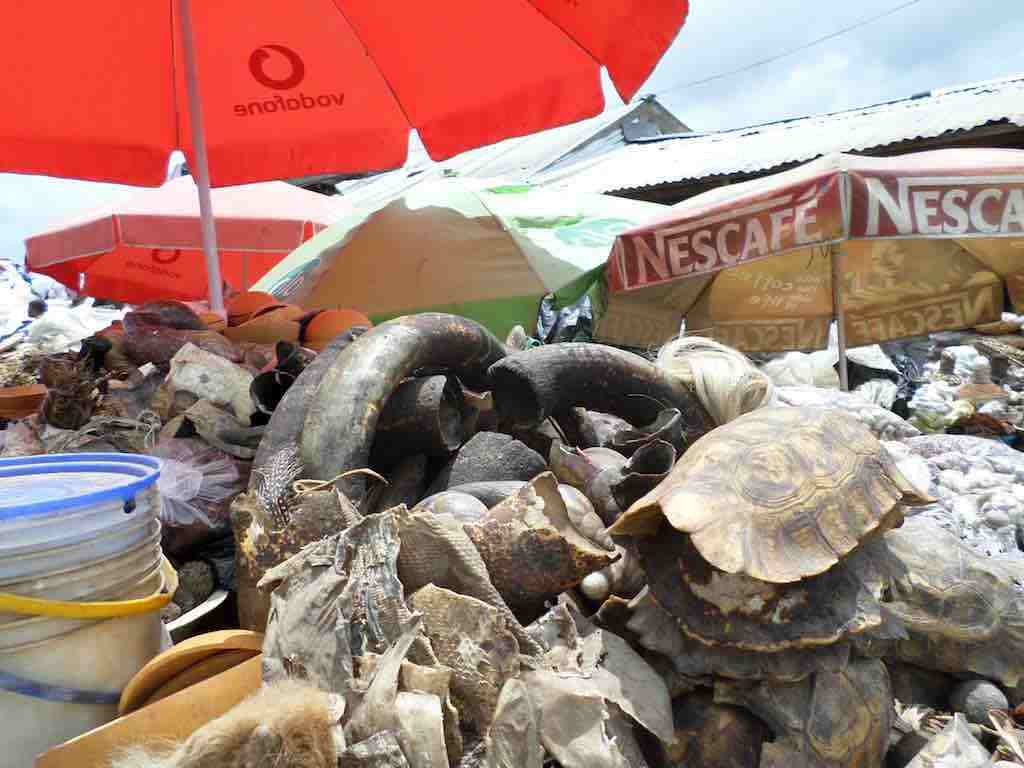
A pile of animal body parts used in traditional African healing. Asian buyers are increasingly infiltrating customary outlets. Photo courtesy African Pangolin Working Group
Western-style policing
For now, Jansen believes that Western-style policing is not as powerful a deterrent against poaching as a command from tribal leaders. But their ability to influence behaviour in their communities may be diminishing among a younger generation that Jansen says has developed a “proclivity to a Western way of life and a culture of making money”. Where traditional practices are ridiculed for being “sympathetic magic” and superstitious belief, a component that has helped protect the pangolin is being lost, says Jansen.
In African countries where these animals are not revered as totems of the spirit world, they face threats from unregulated harvesting and poaching for bushmeat.
According to Dr Maxwell Boakye – a doctoral student of Jansen and the author of a study unravelling the bushmeat commodity chain in Ghana – pangolins are the most preferred wildlife species for festive meals among the wealthy in West and Central Africa and are consistently hunted.
A Nigerian businessman, Omotolani Adeyemi, says he will “never stop eating pangolins” because he loves bushmeat. He laughs when asked about the threat of species extinction.
However, it is the massive demand for pangolin scales in Asia that poses the greatest threat to the African pangolin population. In his study, Boakye also shows how rural bushmeat markets, or “chop bars”, that originally sold harvested pangolins for food are now doubling up as collection points for pangolin scales used to supply the illegal trade to Asia.
The same is true for muthi (medicine) markets, where Asian buyers are increasingly infiltrating customary outlets and local merchants are becoming trading agents.
Dr Vivienne Williams, an independent researcher at the University of the Witwatersrand who specialises in African traditional medicine, views the international wildlife trade as a multi-faceted Rubik’s cube, where solving all sides of the problem in a logical and persistent manner is necessary.
“Most conservation problems are embedded in complex socio-ecological systems, and they essentially lack clear solutions because each problem is linked to other problems,” she says.
Venda women respectfully greet their chief, Rapson Davhana Matamela, in traditional fashion. Photo: Alexis Kriel
Extreme poverty
Poverty is one such problem helping drive the illegal wildlife trade. Vusi Mathe lives in a poverty-stricken rural settlement called White City in Mpumalanga, 800m from the Andover Nature Reserve, marketed by the Mpumalanga Tourism and Parks Agency (MTPA) as “an unspoiled wildlife area”.
But Mathe says extreme poverty has led the locals to hunt game in the reserve for food and he doesn’t think much wildlife is left there. “I know a lot of people who are poaching for bushmeat in the reserve because they are poor. I have never done it, but I have thought about it,” he says.
Andover is 100% under land claim, which is the restitution of land rights for the dispossessed original owners. But local residents don’t feel they have a stake in the local wildlife and tourism economy. Unemployment in the area is currently at 52%, according to the MTPA, and there are few economic opportunities outside of the reserve.
In an article published on Ranger Day in April, John Scanlon OBE, who served as the secretary-general of CITES from 2010 and is now special envoy for African Parks, points to Garamba National Park in the Democratic Republic of the Congo, where poaching is down by 98% over the past two years due to a well-trained ranger force that has created a sense of law and order and brought security and stability to Garamba and its surroundings.
“It is about securing an area for wildlife and people through well-trained rangers, who can apply law and order with the strategic use of fencing – to keep animals in and away from people and their crops – to engage with and provide decent jobs to local people and to support local enterprise via the likes of tourism and the marketing and the consumption of local produce,” he tells Oxpeckers.
Williams believes it is urgent and essential for “sites in African countries to be identified for strict protection of pangolins, with only the controlled salvage of pangolins that have died a natural death being permitted for use in traditional medicine.”
She says “non-consumptive cultural belief systems” should be supported, and communication should be fostered for amplifying African voices and finding unique solutions.
In parts of southern Africa, for example, traditional medicine practitioners only use a few grams of pangolin scale powder when dispensing to a patient, says Jansen.
“The pangolin power is used for a variety of medical or spiritual conditions and these healers do keep a few scales in their inventory of local herbs and animal body parts at any one time.” But, Jansen adds, “these scales can last a number of years due to the very low volumes dispensed.”
The original article in Oxpecker.org, can be found here
Recent seizures of huge hauls of scales have turned Nigeria into Africa’s key illegal pangolin exporting country. The APWG’s Alexis Kriel investigates what is driving the trade in this article published in Oxpeckers.org
(Photo above: Lagos market: The peddlar offered two live pangolins to a Chinese undercover volunteer called ‘African Warrior’. Photo courtesy China Biodiversity Conservation and Green Development Foundation)
“African Warrior” is a Chinese conservation activist who volunteered to travel to Nigeria in West Africa earlier this year to investigate the illegal trade in pangolins. For the sake of her security, and to protect her anonymity, her group gave her the soubriquet of a leader setting out to war.
She provided regular updates on her progress in Nigeria to the China Biodiversity Conservation and Green Development Foundation, the environmental NGO that sent her there. Corresponding with them on WeChat, the Chinese social media app, she described what she found in a Lagos market:
“The local peddler has two living pangolins. He can speak Chinese. The pangolins have been kept in a bag wrapped in two layers; the outer layer is a flour bag with the Chinese name of the flour printed on it, and the inside one is a yellow bag with English letters.
“The peddler kicks the pangolins with his foot, indicating that they are alive. Another ragged peddler takes a pangolin out of another bag – it is curled into a ball. He lifts it up and throws it on the ground. After the pangolin uncurls and starts to move away, the peddler steps on its tail.”
The foundation is achieving what few organisations, in China, have achieved before in the efforts to save pangolins from extinction. In September 2018 the foundation filed the first domestic public-interest litigation against the state forestry department of Guangxi Zhuang for negligence after 32 rare and endangered pangolins that had been confiscated died while in the state department’s care. In January this year, the foundation obtained notice of acceptance of the lawsuit and the first public-interest litigation case involving pangolins in China was officially approved and is currently being heard.
Since then, the Chinese government has agreed to co-operate with the foundation to create new pangolin legislation, which it hopes will lead to the elevation of pangolins from a Grade II to a Grade I animal in China. This will mean permits for hunting pangolins and the use of pangolin scales are decided on a state level, as opposed to a provincial level, affording greater protection to pangolins and regulations more in line with those contained in the Convention in International Trade in Endangered Species (Cites).
Dr Jinfeng Zhou is the Green Development Foundation’s secretary general and the first chairperson of the China Pangolin Research Centre, a private organisation established in February this year in a signed agreement with Xi’an Jiaotong-Liverpool University.
“We must fight for change urgently. We need more stakeholders,” said Zhou.
Drastic surge: The growing demand for pangolin scales has contributed to making it the most heavily poached and trafficked mammal on the planet, according to the International Union for Conservation of Nature. Graphic: Lori Bentley
Boasting rights
In Hong Kong business people are treated to pangolin meat openly, despite laws that prevent its consumption, and it is often used for boasting rights during business deals. The scales are used in Vietnam and China for traditional medicinal cures.
The recent drastic surge in the illegal trade of pangolin scales has created panic among conservationists and environmental NGOs, who see the spike as signalling an acceleration on the course to extinction for this endangered animal that is high on the red list of threatened species of the International Union for the Conservation of Nature (IUCN).
A confiscation of pangolin scales from Nigeria destined for China, amounting to 9.14 tons and intercepted by Hong Kong customs in February 2019, was the single largest confiscation of pangolin scales in history.
Then, in April, there were two confiscations of scales in Singapore, a week apart. The scales were sent from Nigeria and were bound for Vietnam. The two amounts were just under 13 tons each and, combined, represented the deaths of an estimated 40,000 pangolins.
As a result of the large quantities of scales being confiscated, Jinfeng Zhou’s foundation set up a team to investigate the illegal use of pangolins in Nigeria. His team’s work is devoted to opening up avenues for co-operation with Nigeria to stem the trade and to enforce the law.
He has sent letters to the Nigerian Embassy in Beijing, the minister of environmental protection for Central Africa and to the Nigerian president, hoping to strengthen ties between the two countries for protecting pangolins and other endangered wildlife species. As a result of these letters, the foundation has been invited to participate in the National Biodiversity Conference to be held in Nigeria from May 20 to 22, under the theme “Delivering Nigeria’s business deal for nature”.
“We hope that Chinese corporations in Nigeria will bear social responsibility. They should donate to endangered wildlife, like pangolins – it is conducive for enhancing their public image to the world, and encourage their employees to participate in conservation,” Zhou said. He believes every Chinese citizen applying for a visa to visit Nigeria should be routinely informed that trade in pangolins is illegal.
“The Nigerian government must establish strict and clear laws to improve the punishment system, and at the same time increase publicity. Relevant knowledge should be popularised from rural to urban areas, with increased public participation,” he said.
Nigeria has ratified the Convention on International Trade in Endangered Species, which has banned all trade in Pholidota – the definitive order of pangolins, comprising all eight species. It remains the key exporting country of pangolins to Asia, however – according to the Nigeria Customs Service, in 2018 alone the illegal trade in pangolin scales seized in the country had a value of US$900-million.
Lagos is Nigeria’s largest city and has become the collecting hub for pangolin scales from Nigeria and neighbouring countries Cameroon, the Central African Republic, the Republic of Congo and Gabon, according to a recent threat assessment prepared by the United Nations office on drugs and crime (UNODC).
The Nigerian law that governs protection of pangolins falls under the Endangered Species Act, which states: “No capture, local or international trade is allowed. For a first offence, a fine of US$1,500 may be imposed and/or imprisonment up to five years.”
Cites has no record of arrests or convictions under this legislation in Nigeria up to September 2017, and is currently seeking updated information in preparation for the upcoming Cites COP18 meeting.
Oxpeckers sent questions relating to the confiscations of pangolin scales originating from Nigeria this year, as well as whether there had been any arrests and prosecutions in connection with the illegal trade in pangolins, to Sikiru Tiamiyu, Nigeria’s spokesperson for the Convention on Biological Diversity, of which Nigeria is a signatory. Tiamiyu said he had passed them on to the Nigerian environment minister and the director of forestry, but their responses had not been received at the time of publication.
The former minister of environment, Ibrahim Usman Jibril, said in response to the seizure in August last year of 7,100kg of pangolin scales alleged to have originated in Nigeria by Japanese customs officials that investigations had been initiated.
The Nigerian Federal Ministry of Information and Culture quoted Jibril as saying the source of the scales could not have been Nigeria because pangolins were near extinction in the country and Nigeria was being used as a transit route for illegal wildlife trade.
“… there has not been any case of illegal wildlife trade from Nigeria as a source country. However, globalisation allows and encourages international trade which traffickers have exploited and exposed us to some of these unwholesome practices which we frown at as a nation and defender of endangered species,” he said.
Jibril resigned as environment minister in December 2018 and was not prepared to comment on the recent confiscations of scales linked to Nigeria, passing on questions to the new minister, Suleiman Hassan Zarma.
A white-bellied pangolin for sale in a ‘chopbar’ in West Africa. Photo: Rob Bruyns
Perfect storm
It is the perfect storm that brings together these two disparate countries in an exchange that suits both parties but is driving Africa’s pangolins to extinction.
In most African supply countries, pangolins are traded as bushmeat in local markets which double up as a source of scales for export to China and Vietnam. Bushmeat is used as a source of protein and of income during lean agricultural periods in many West and Central African countries.
More than half the population in Nigeria lives below the poverty line; pangolins are still available in bushmeat markets, every day – although, according to local accounts, because of alarming rates of harvesting, they are becoming harder to find.
“The market tradesman calls me often and asks me if I want pangolins,” said African Warrior. “They can get pangolins and they are looking for a market. Chinese people are eating pangolin soup in Lagos, every day.”
The African headquarters of many international Chinese companies are based in Nigeria, employing thousands of Chinese citizens who earn at least 10,000 yuan (about $1,500) a month. The American Enterprise Institute estimated the value of Chinese investments and construction contracts in Nigeria at US$21-billion between 2016 and 2018.
According to African Warrior’s research, most of the pangolins traded in Nigeria are sold to members of the Chinese community, as individual animals (for domestic use) or in bags of scales (for export).
The local traders told her they could provide from 200kg up to 500kg of scales a month. The scales are stockpiled and shipped to Asia hidden in containers and enclosed in packages labelled and marked as an inconspicuous product – such as “frozen beef” or “sliced plastics”.
Field studies in Central and West Africa conducted by UNODC showed that hunters who had previously sourced pangolins for their meat are now capitalising on the scales, and that the supply is being “crowdsourced” to include part-timer and non-specialist hunters. The meat markets serve as a central point for the aggregation of scales.
The hunters interviewed in the UNODC study knew that hunting pangolins without a licence was illegal, but most said the offence was less serious than other forms of poaching – for example, the poaching of elephants. Fear of enforcement did not play a big role in their decision making.
African Warrior said when she was in Nigeria police were present and police cars were parked at the entrance to the market in Lagos, but they turned a blind eye to the flagrant trade in wildlife.
“By the time I arrived at the market, it was afternoon. Pangolins were sold out, leaving only crocodiles, lizards, snakes and turtles – all captured from the wild. Even before entering the market, I was surrounded by peddlers who recognised me as Chinese and wanted to sell me wild animals,” she said.
Global trade: Traffic found that most of the air shipments of pangolin products out of Africa routed through European countries. Graphic: Lori Bentley
Trade routes
Research by Traffic, the global wildlife trade monitoring group, found that most of the air shipments of pangolin products out of Africa routed through European countries and that trafficking trade networks were constantly shifting.
Traffic analysed 1,270 seizure incidents between 2010 and 2015 and found that the trade involved 67 countries and territories across six continents. The report demonstrated the global nature of pangolin trafficking, which is not limited to Asian and African range countries – though trade outside of Asia and Africa is poorly understood.
The African Pangolin Working Group, a non-profit organisation set up in 2011 to conserve Africa’s pangolins, sent a team to investigate the bushmeat trade in pangolins in Ghana, West Africa, between September 2013 and January 2014. (The author of this article is the projects director of that group.)
The team found that at the rural eating houses where bushmeat is served, referred to colloquially as “chopbars”, pangolin scales used to be a by-product of the pangolins sold as bushmeat and were discarded. In recent years the scales have become a valuable commodity that is sought as the primary product, and the meat has become a derivative.
More recent research by the working group in Southern Africa found in-country and cross-border trade in pangolins in and between South Africa, Zimbabwe, Mozambique and Botswana. In South Africa the trade is mostly in live pangolins, with limited scales being sold through muthi (medicine) markets for use in traditional African cures.
Colonel Johan Jooste, national commander of South Africa’s Directorate for Priority Crime Investigation in the South African Police Services, responsible for combating and preventing national priority crimes – including trade in threatened and protected species such as pangolins – said recent court cases that had resulted in convictions and sentencing of pangolin traders served as a deterrent.
“There is currently no indication of syndicates involved in the trafficking of pangolins in South Africa. All arrests show that what we are seeing is opportunistic individuals who want to make money but do not have a market to sell these animals. They are fishing for potential markets when they get arrested,” Jooste said.
Chopbar: At rural eating houses where bushmeat is served, pangolin scales have become a valuable commodity. Photo: Rob Bruyns
Criminal syndicates
Ofir Drori is the founder of Eagle, a group that has been instrumental in the arrest, prosecution and convictions of wildlife poaching and trafficking syndicates in nine African countries. He described a syndicate-driven racket behind the pangolin trade – with traffickers who have one foot in Asia and one foot in Africa propagating the supply and demand in both countries.
They are Chinese but are integrated with high-ranking government officials from Africa – corrupt ministers, ex-ministers and mayors, who are investing back into the syndicates for further buy-in from customs people and police commissioners, he said.
Drori said these networks existed in Africa from as early as the 1980s, operating in many countries simultaneously. “When there are high margins, the syndicates intimidate the freelancers and form monopolies – those who were doing rhino horn and ivory added pangolins.”
He is critical of big conservation NGOs which he believes have been aware of the syndicates trafficking wildlife for two decades but have failed to find a solution. “The only way we will be successful is if we have a very serious shift regarding conservation. There is a huge conservation machine, [but it is] not making progress,” he said.
Pangolins, now commonly referred to as the most traded mammal on earth, were previously conspicuous by their absence in conservation awareness. They have garnered attention worldwide since being uplisted from Appendix II to Appendix I by CITES at COP17 in South Africa in 2016. This legislation intended to regulate international trade, but more than two years later the international trade has increased.
Drori said the Eagle template is to be active on the ground, infiltrating criminal networks, setting up sting operations, co-operating with law enforcement agencies to enact arrests, preventing corruption and creating deterrents through awareness.
According to Drori, the criminal syndicates involved in the illegal pangolin trade have boosted the rate of distribution and increased marketing. “It is a positive-feedback-loop – pangolin scales became extremely profitable and they are establishing a cycle of ever-increasing supply and demand,” he said.
Reblogged from the Environmental Investigation Agency (see the original post here)
Members of China’s National People’s Congress, the country’s legislature, have made a public announcement to propose a ban on the use of pangolin products for traditional Chinese medicine (TCM).The proposals will be presented at this year’s annual NPC sessions, which started on 5 March.In 2016, the Congress signed into law a revised version of the country’s Wildlife Protection Law. The Environmental Investigation Agency had previously raised concerns about ambiguities and loopholes in this law, particularly those which sanction the continued trading and use of wildlife at risk of extinction.
The permits are used by designated hospitals and licensed companies that produce and sell TCM products containing pangolin.
“The position taken by China’s lawmakers proposing a ban on the use of pangolins in TCM is an encouraging sign there is support for closing domestic pangolin markets in China,” said Chris Hamley, the EIAs Senior Pangolin Campaigner.
“China’s continued use of pangolin scales and meat is a major driver of poaching and trafficking across the pangolin’s range.”
The EIA strongly urges China’s leadership and legislators to adopt the proposal for a ban on the use pangolins in TCM. Doing so would demonstrate a significant commitment to addressing one of the major driving forces in the rapid decline in wild pangolin populations across Asia and Africa.
The following article was published by the Middelburg Observer
If the illegal trade of pangolins is not stopped, these mysterious animals will follow the same path as their brothers in Asia, to extinction.
“Asia has killed their own pangolins and now they are coming for ours.”
That is the dooming message by Professor Ray Jansen of the African Pangolin Working Group, who is desperately trying to combat the poaching of these animals.
Prof. Jansen traveled to Middelburg to testify for the aggravation of sentence for Senior Mabena, who pleaded guilty to dealing in a protected species without permission.
He says that his main aim in testifying in these types of court cases is to educate the judicial system. In Zimbabwe, a standard sentence of nine years imprisonment is handed to people caught in possession of pangolins.
A photo sent to Prof Jansen by a poacher trying to sell a pangolin.
Shockingly there have been incidents where South African courts let poachers go with a slap on the wrist, like a suspended sentence or a fine of as little as R100.
Prof. Jansen is very happy with the six years imprisonment that Magistrate Hans Combrink sentenced Mabena to.
Mabena and two others were caught at the Middelburg Mall after a tip-off by the public led to a sting operation. The pangolin in their possession was found alive.
Two weeks before the Middelburg Mall pangolin rescue, two other pangolins were discovered in a boot of a car at the Shell Ultra City outside Middelburg. Unfortunately, it was too late to save their lives.
Prof. Jansen said that once they are made aware of a poacher in possession of a pangolin, time is of the essence. Pangolins will not live for more than two weeks after they have been captured. They cannot successfully be kept in captivity.
“I spoke to a poacher on the phone this morning who was selling a pangolin. He told me that he has had the animal for three months and I said to him that is an outright lie,” Prof. Jansen told the Middelburg Observer.
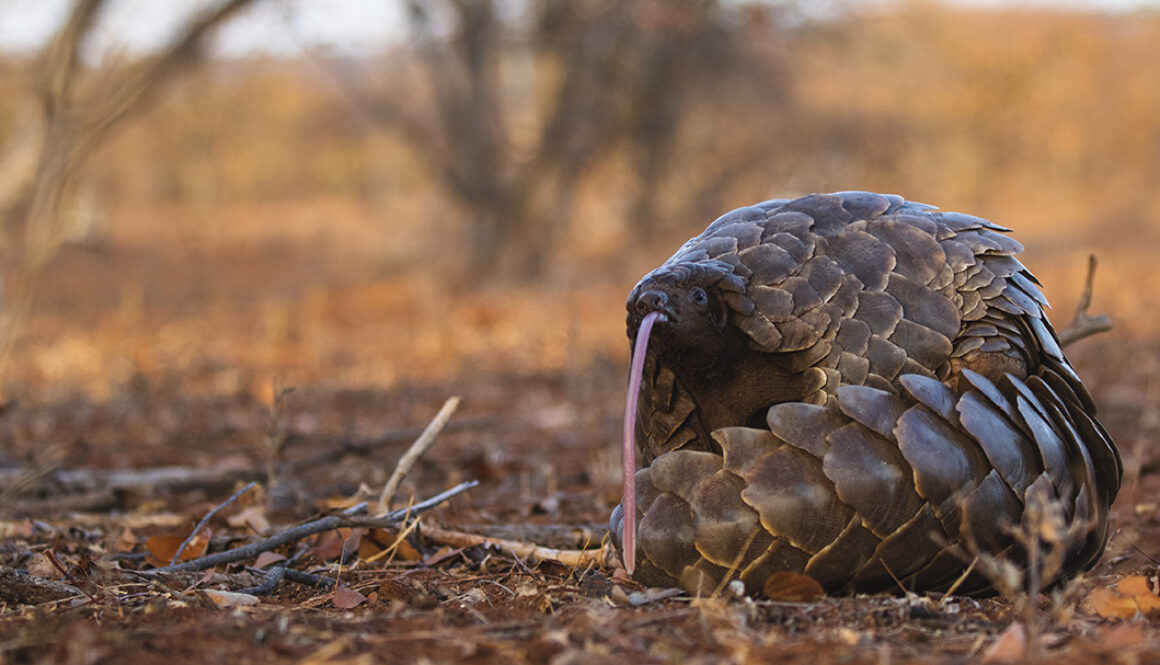
He said that poachers try to feed them things like rice and bread but pangolins do not have a moving jaw, and a very long tongue. They only eat ants and termites, and won’t eat dead ants or food they didn’t forage for themselves. They are also very specific about what types of ants or termites they eat and the species can often be traced to a specific area.
To take a pangolin and simply release it anywhere in the wild will definitely cause its death. It is much like abducting a human from his home and dropping him off on the other side of the continent where they speak a different language and eat completely different food.
Very little is known about pangolins. Their closest living relative is a cat and they are the only mammal covered in scales. It is impossible to try and estimate their numbers because they are nocturnal, solitary and silent. They have one pup every one or two years.
Although Asian pangolins showed some ability to adapt in captivity, like zoos, African pangolins have not. The longest an African pangolin could be kept alive in captivity for was six months at a zoo, before it too died of organ failure.
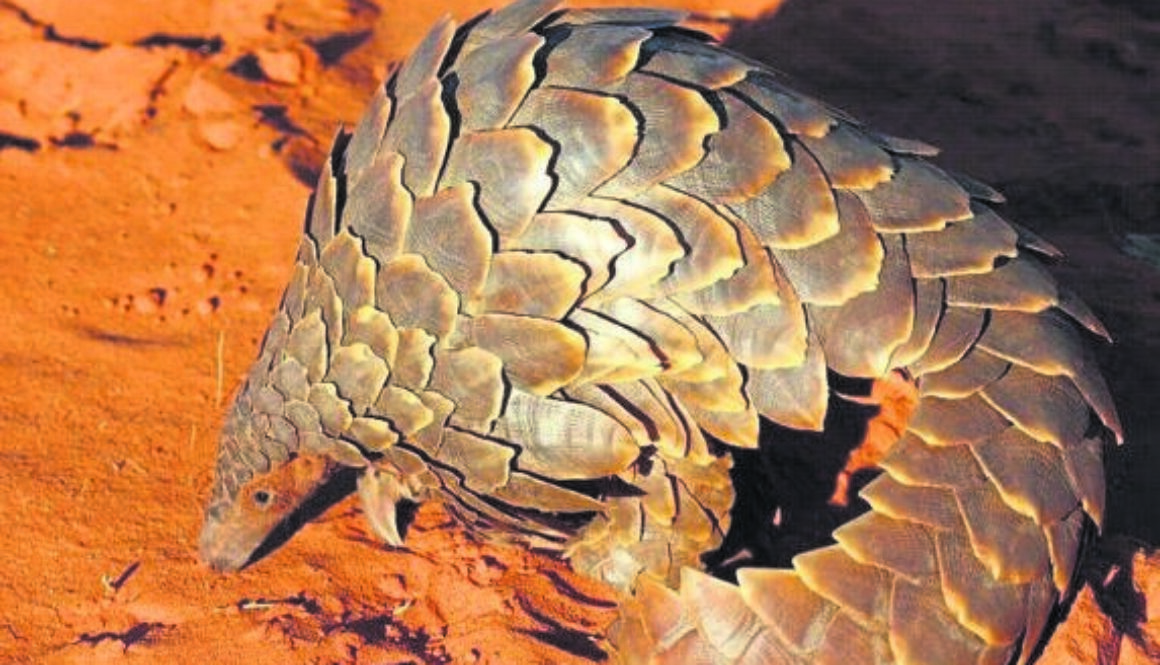
Very little is known about these mysterious mammals. PHOTO: Francois Meyer (African Pangolin Working Group)
The only way to protect these animals is to protect their territory.
A pangolin’s territory ranges from five hectares in a tropical climate to 20 hectares in a dry climate. The males are very territorial and will often fight, almost to the death, if another pangolin intrudes on its area. Every time a pangolin is taken from the wild, it leaves a gap that impacts the whole ecosystem around it.
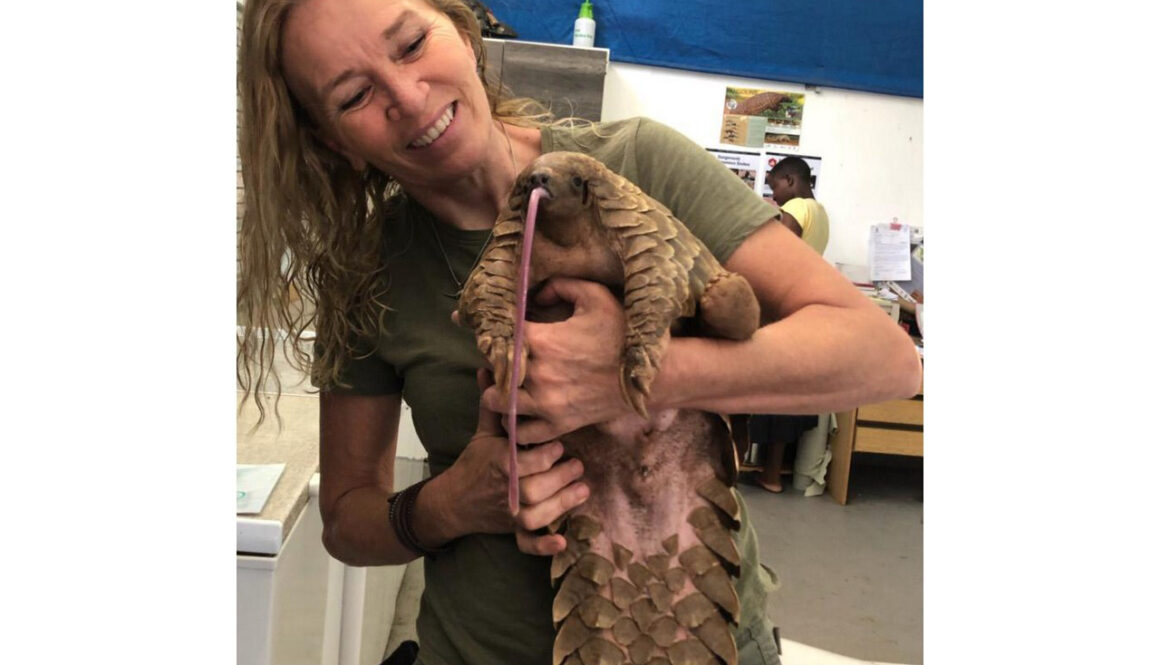
A pangolin at a rehabilitation centre. PHOTO: Francois Meyer (African Pangolin Working Group)
Prof. Jansen says that the demand from Asian markets is overwhelming. Research among local communities, wherein interviews with almost 300 traditional healers and elders were conducted, showed that the local traditional medicine industry has very little impact on pangolins.
The Asian market is a different story. In 2017, 47 tonnes of pangolin scales leaving from Africa to Asia were intercepted and 40 tonnes in 2018. That amounts to over a million pangolins that were poached.
Poaching cases in South Africa have increased from 10 in 2016, 15 in 2017 and 43 cases in 2018.
“The poaching for Asian markets is all about greed and money. It is very similar to the rhino horn trade, except that pangolins are classified as more endangered than rhinos and are more difficult to protect,” says Prof. Jansen.
The scarcer the product, the higher its value climbs on the black market. This, in turn, is very attractive for people from poor communities looking to make easy money.
Prof. Jansen says that the only way to combat pangolin poaching is by educating local communities to take ownership and act as custodians of these animals, to use the law as a deterrent by making sure offenders are given harsh sentences and to take away the demand for pangolin products.
If something drastic is not done, pangolins will go extinct soon. PHOTO: Francois Meyer (African Pangolin Working Group)
The latter is the most challenging because it stems out of Asian culture that is thousands of years old. Regardless of pangolins having no medicinal value whatsoever, it is convincing the Asian market of that fact that is the tricky part.
“We must get the Asian youth on our side. They must be the change. Big names like Jackie Chan, who advocates against poaching, are a huge help, but it remains an uphill battle,” Prof. Jansen says.
To successfully rehabilitate a pangolin costs around R50 000 per animal. It involves continued monitoring and often recapturing animals once their condition deteriorates.
How you can help protect these animals:
Pangolin poachers are often very brazen when advertising the animals for sale. If you hear about a pangolin being sold you should immediately contact the African Pangolin Working Group. They can be contacted by visiting their website www.africanpangolin.org or by contacting Prof. Jansen directly on 082 555 1016.
They have contact with all the relevant police units and will mobilise them as soon as information is received.
Prof. Jansen urged the public not to try and save the pangolins themselves, as every second counts, it is important for an expert to reach the animal as soon as possible, but also for the police to gather evidence.
The following article was written by Sharika Regchand and published by the Witness
Outrage greeted news on Thursday that the 42-year-old man who tried to sell a pangolin in Pietermaritzburg was given a R240 000 fine or alternatively a wholly suspended three-year sentence.
Pietermaritzburg magistrate Reard Abrahams took into consideration that Isaac Mutero had already spent a year in jail awaiting sentence.
The chairperson of the African Pangolin Working Group, Professor Ray Jansen, said he was outraged.
“It is ridiculous and quite pathetic of our judicial system. The National Environmental Biodiversity Act prescribes a sentence of 10 years or a R10 million fine or both.
“I am quite disgusted. The police went to a lot of trouble to apprehend the illegal wildlife trafficker who was trying to sell the pangolin in a public mall in Pietermaritzburg.”
Jansen added that pangolins are a “highly endangered species”. It has the highest protection status of any endangered species in SA, including the rhino and elephant.
He said the pangolin had been treated by the group and was in intensive care for over two weeks before it died. Treatment alone cost between R30 000 and R40 000.
Mutero pleaded guilty last year to contravening the National Environmental Management Biodiversity Act. He said in a plea at the start of the case that the scaly mammal got into his brother’s homestead in Zimbabwe. He thought it would be a good idea to bring the animal into the country to protect it because people in Zimbabwe killed pangolins.
Mutero said in the written plea that his intention was to sell the animal to Croc World in Scottburgh. He said he thought the buyer he was meeting when he was arrested — in January last year at the Brookside Mall — was from Croc World.
Abrahams stressed the seriousness of the offence. He said pangolins are facing extinction and that they are being poached for medicinal purposes and nutrition.
He said the mitigating factors included that Mutero was married, had four children and had no previous or pending cases. He had also pleaded guilty, indicating remorse.
Mutero has also been in custody for over a year, he said. The aggravating factors were that Mutero did not verbally testify and take the court into his confidence.
The magistrate said the court would have liked to have questioned him about how he had brought the pangolin into SA without the authorities finding out.
Had they known, they would not have allowed it to be smuggled into the country.
Another aggravating factor was that the pangolin died, because the anteater was not given its special diet. “It is difficult to believe he had the best interests of the pangolin at heart and was not swayed by monetary gain.”
Surely Zimbabwe had its own wildlife centres the pangolin could have been taken to, he said. He also found it strange that Mutero was employed in Amanzimtoti, not too far from Croc World, yet he was arrested in Pietermaritzburg, where he tried to sell the pangolin.