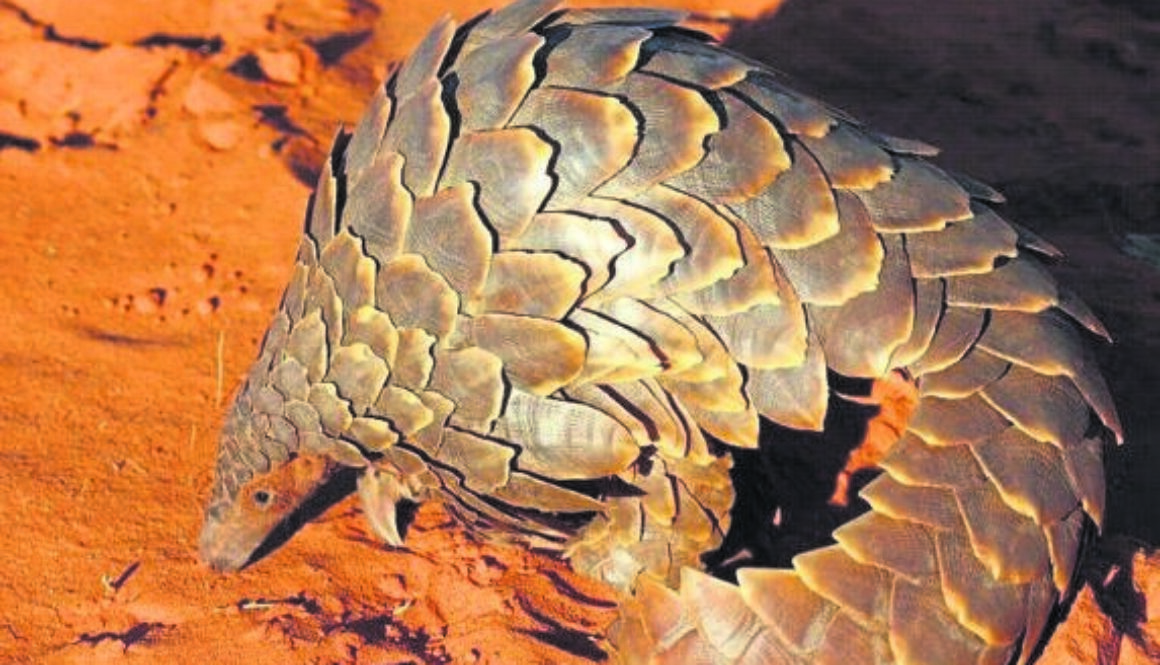
The following article extract was published by the Daily Maverick and was written by Tessa Knight.
A policy document has been released that assesses gaps in the strategies and policies used to protect the most trafficked mammal in the world — the pangolin.
“A question of scales”, a report compiled by Richard Chelin for ENACT (Enhancing Africa’s response to transnational organised crime), emphasises the need for urgent action to protect the animal known as the scaly anteater.
Pangolins are the most trafficked mammal in the world. Markets in Asia have a voracious appetite for the solitary creatures and after decimating the Asian population, African numbers are decreasing at alarming rates.
The rest of the article is behind a paywall, and can be accessed here
The following article was written by René de Klerk and published by Safarinews.org
During August, news of a poached pangolin reached the team at the Johannesburg Wildlife Veterinary Hospital (JWVH). While the rescue of live pangolins from the illegal trade in South Africa during sting operations is nothing new, this case was different. Although the animal was alive, poachers had sealed its fate by removing its claws.
A pangolin confiscated from poachers did not survive, despite intervention. Photo: Nicci Wright
The JWVH team named him Fortunate, and tried their best to save the animal, with experienced vet
Dr Karin Lourens treating him under anaesthetic in the theatre. He was monitored to determine whether his most important tools, his claws, would grow back – if they did, he could return to the wild.
Unfortunately, after three months of care there was no sign of regrowth, and other aspects of the pangolin’s health continued to deteriorate. Fortunate reached the point of no return and the difficult decision was taken to humanely euthanase him. Without claws he would never feed on his own again, and pangolins are unable to survive in captivity.
Fortunate was yet another pangolin lost in the battle against poaching.
“Because of stress, their immune systems are compromised and they often die”
According to Nicci Wright, wildlife rehabilitation specialist at JWVH and director of the African Pangolin Working Group (APWG), more than 68 tonnes of African pangolin scales have been intercepted in Asia’s illegal trade, this year alone. This equates to approximately 300 000 pangolins.
“In Southern Africa, pangolins are poached and sold alive on the illegal trade,” Wright says. The APWG assists the South African Police Service (SAPS) and environmental law enforcement officers when sting operations are carried out to intercept poachers. JWVH and APWG are mandated to treat, rehabilitate and release pangolins in South Africa. These two organisations, in collaboration with the Humane Society International – Africa, work hands-on with all pangolins that are confiscated in South Africa.
For security reasons, the animals are not kept on site at JWVH, and a great deal of time and effort goes into the rehabilitation of survivors. Since the hospital was established in 2016, the team has treated nearly 60 pangolins. “There are probably 10 times more that we are not getting to,” Lourens says.
Pangolin found during a sting operarion. Photo Nicci Wright APWG
When confiscated, these animals have often been without food and water for weeks, and their condition is dire. “They always have severe health issues because they have been kept without food and water, often in a sack, or wired into baskets unable to move. We have even found them screwed into closed speaker boxes and bolted into wheel wells of vehicles,” Wright adds. “They urinate and defecate in the same space and inhale the same air. Because of stress, their immune systems are compromised and they often die no matter what we do,” she explains.
Initially only 50% of pangolin patients treated at JWVH survived, but with more knowledge and experience the survival rate is now 80%. Pangolins remain the most expensive animal treated at the hospital, costing R1 000 per day. After release, the costs do not stop.
There is a strict release protocol, which involves intense monitoring. Every pangolin is fitted with VHF and satellite telemetry tags, which cost APWG in excess of R20 000 per pangolin per day.
Apart from treating and releasing pangolins, JWVH and APWG provide evidence for SAPS dockets, which helps build the chain of custody for the court case against poachers.
“In the beginning they were given a R500 fine because it was classified as stock theft,” says Lourens The longest sentence to date has been eight years. “This is because of the continued work that the APWG does with various provincial law enforcement departments, magistrates and prosecutors,” Wright says.
Pangolin scales are used in traditional medicines, and they are also seen as a delicacy. African pangolin species are being targeted by syndicates because the Asian pangolin numbers have been severely reduced.
Poaching pangolins from the wild is mostly orchestrated by international syndicates, Lourens says.
“Pangolins are so highly trafficked, we never know if it will be the last one we receive for treatment,” she adds.
Provincial police spokesperson Colonel Lungelo Dlamini said police received information on 6 October from a member of the public that he had been contacted and offered a pangolin.
“On the following day an operation was conducted and arrangements were made to meet the seller(s) at the Kolonnade Retail Park in the Sinoville policing area. A car was identified where the pangolin was held,” Dlamini explained.
A team of police officers from different units arrested four out of five suspects.
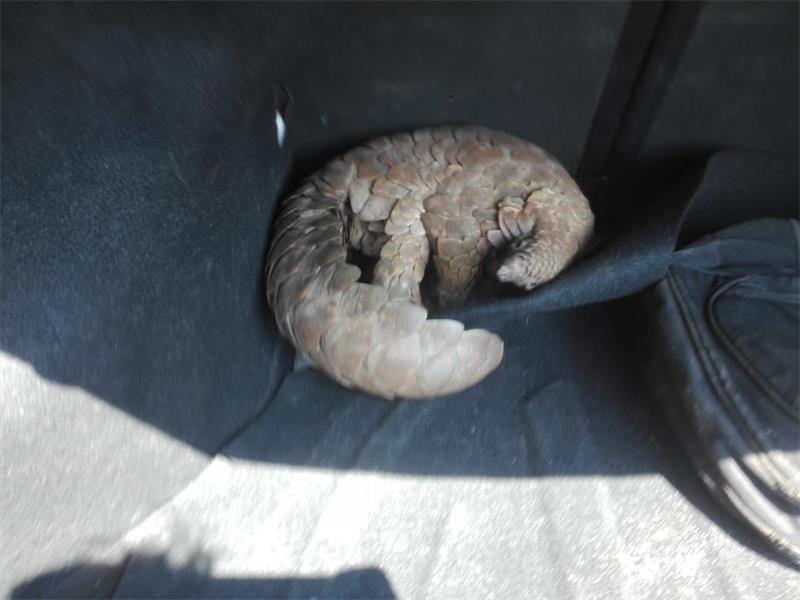
“The pangolin was found in the boot. Suspects were detained at Sinoville SAPS. They will be charged under the National Environmental Management Biodiversity Act 10 of 2004 section 57 (1) to sell, trade and possession of an endangered species animal without a permit.”
Professor Ray Jansen from TUT and founder of the African Pangolin Working Group said the pangolin, which was rescued this morning, was doing all right.
“He is very weak, thin and dehydrated. He has also lost a lot of white blood cells,” Jensen told Rekord.
Because the pangolin, an 8.8kg male, was rescued outside Kolonnade Retail Park, it has been named Zambezi.
Jansen said that although Zambezi is doing much better, he is not out of the woods.
“He has a 50/50 chance. I am very worried about him,” he said.
Jansen said they have been trying to trace the poachers – allegedly Zimbabwean nationals – since the middle of September.
Four poachers were arrested this morning at the Kolonnade Retail Park for smuggling a pangolin.
One of the five poachers managed to flee the scene on foot and is still at large.
The following article extract was published by the Daily Maverick and was written by Tessa Knight.
August saw two breakthroughs in pangolin protection: China announced traditional medicines containing pangolin will no longer be covered by insurance, and an Mpumalanga court handed down the harshest sentence for pangolin poaching to date.
Vincent Nyathi has set a precedent for pangolin poaching after he was sentenced to eight years behind bars for keeping one of the endangered mammals in a drum.
According to advocate Ansie Venter, the animal was found after authorities received a tip-off that Nyathi, 32, was keeping a live pangolin in a back room in his mother’s house.
“It was found without food or water and definitely wasn’t kept as a pet.”
The rest of the article is behind a paywall, and can be accessed here
The following article was published by the Middelburg Observer
If the illegal trade of pangolins is not stopped, these mysterious animals will follow the same path as their brothers in Asia, to extinction.
“Asia has killed their own pangolins and now they are coming for ours.”
That is the dooming message by Professor Ray Jansen of the African Pangolin Working Group, who is desperately trying to combat the poaching of these animals.
Prof. Jansen traveled to Middelburg to testify for the aggravation of sentence for Senior Mabena, who pleaded guilty to dealing in a protected species without permission.
He says that his main aim in testifying in these types of court cases is to educate the judicial system. In Zimbabwe, a standard sentence of nine years imprisonment is handed to people caught in possession of pangolins.
A photo sent to Prof Jansen by a poacher trying to sell a pangolin.
Shockingly there have been incidents where South African courts let poachers go with a slap on the wrist, like a suspended sentence or a fine of as little as R100.
Prof. Jansen is very happy with the six years imprisonment that Magistrate Hans Combrink sentenced Mabena to.
Mabena and two others were caught at the Middelburg Mall after a tip-off by the public led to a sting operation. The pangolin in their possession was found alive.
Two weeks before the Middelburg Mall pangolin rescue, two other pangolins were discovered in a boot of a car at the Shell Ultra City outside Middelburg. Unfortunately, it was too late to save their lives.
Prof. Jansen said that once they are made aware of a poacher in possession of a pangolin, time is of the essence. Pangolins will not live for more than two weeks after they have been captured. They cannot successfully be kept in captivity.
“I spoke to a poacher on the phone this morning who was selling a pangolin. He told me that he has had the animal for three months and I said to him that is an outright lie,” Prof. Jansen told the Middelburg Observer.
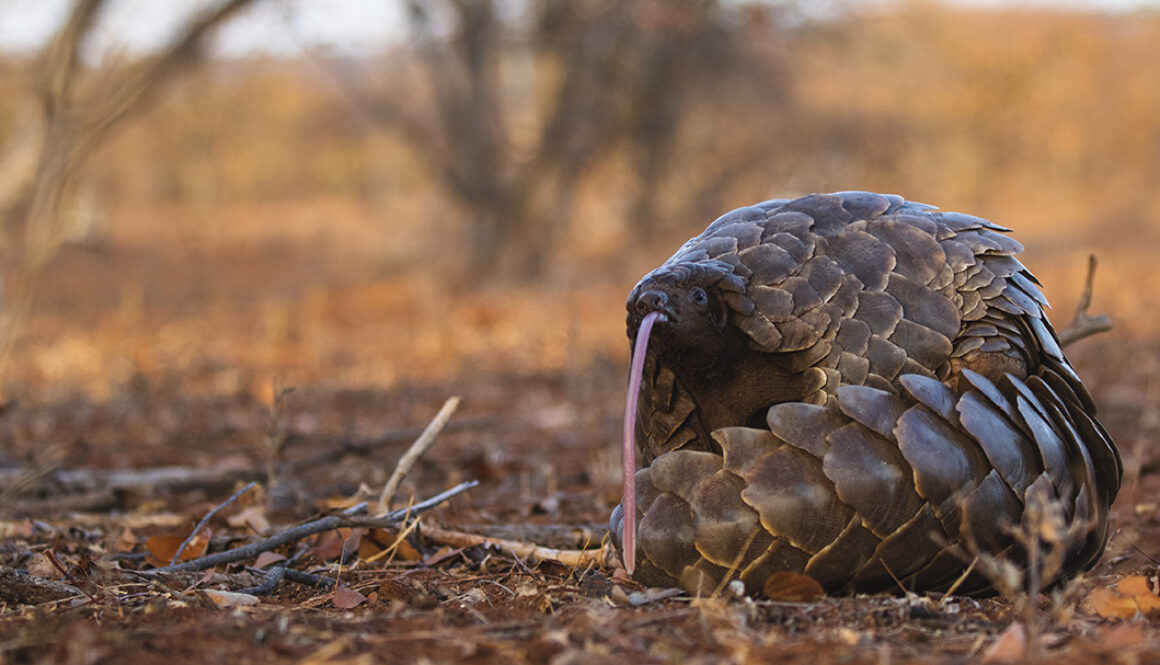
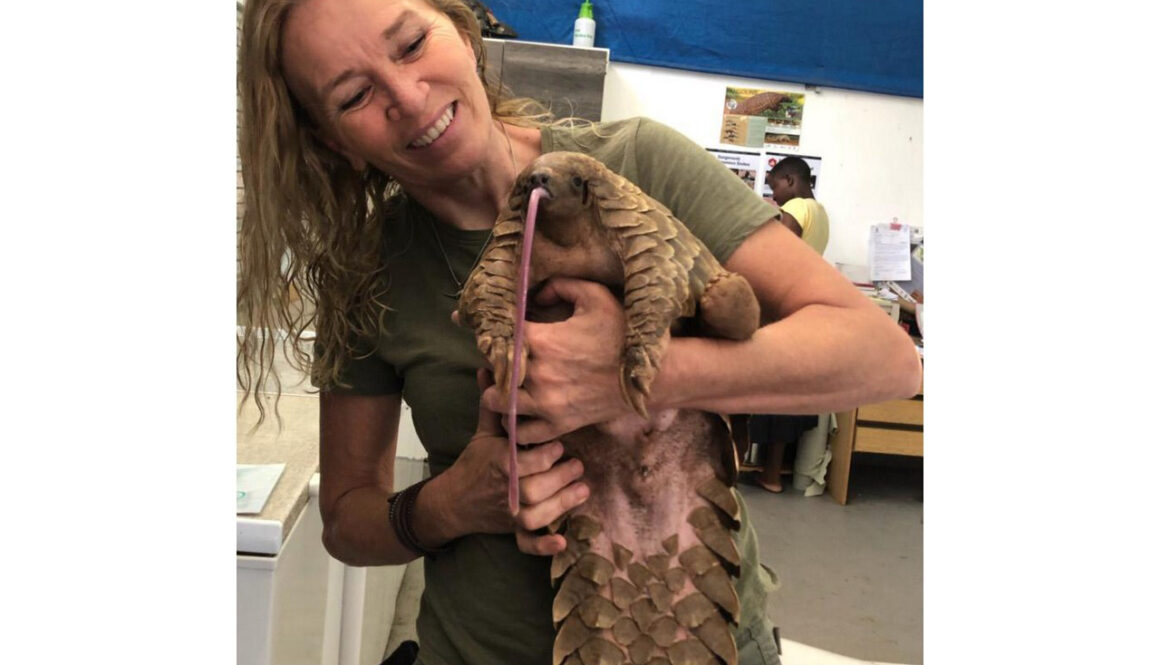
He said that poachers try to feed them things like rice and bread but pangolins do not have a moving jaw, and a very long tongue. They only eat ants and termites, and won’t eat dead ants or food they didn’t forage for themselves. They are also very specific about what types of ants or termites they eat and the species can often be traced to a specific area.
To take a pangolin and simply release it anywhere in the wild will definitely cause its death. It is much like abducting a human from his home and dropping him off on the other side of the continent where they speak a different language and eat completely different food.
Very little is known about pangolins. Their closest living relative is a cat and they are the only mammal covered in scales. It is impossible to try and estimate their numbers because they are nocturnal, solitary and silent. They have one pup every one or two years.
Although Asian pangolins showed some ability to adapt in captivity, like zoos, African pangolins have not. The longest an African pangolin could be kept alive in captivity for was six months at a zoo, before it too died of organ failure.
Very little is known about these mysterious mammals. PHOTO: Francois Meyer (African Pangolin Working Group)
The only way to protect these animals is to protect their territory.
A pangolin’s territory ranges from five hectares in a tropical climate to 20 hectares in a dry climate. The males are very territorial and will often fight, almost to the death, if another pangolin intrudes on its area. Every time a pangolin is taken from the wild, it leaves a gap that impacts the whole ecosystem around it.
A pangolin at a rehabilitation centre. PHOTO: Francois Meyer (African Pangolin Working Group)
Prof. Jansen says that the demand from Asian markets is overwhelming. Research among local communities, wherein interviews with almost 300 traditional healers and elders were conducted, showed that the local traditional medicine industry has very little impact on pangolins.
The Asian market is a different story. In 2017, 47 tonnes of pangolin scales leaving from Africa to Asia were intercepted and 40 tonnes in 2018. That amounts to over a million pangolins that were poached.
Poaching cases in South Africa have increased from 10 in 2016, 15 in 2017 and 43 cases in 2018.
“The poaching for Asian markets is all about greed and money. It is very similar to the rhino horn trade, except that pangolins are classified as more endangered than rhinos and are more difficult to protect,” says Prof. Jansen.
The scarcer the product, the higher its value climbs on the black market. This, in turn, is very attractive for people from poor communities looking to make easy money.
Prof. Jansen says that the only way to combat pangolin poaching is by educating local communities to take ownership and act as custodians of these animals, to use the law as a deterrent by making sure offenders are given harsh sentences and to take away the demand for pangolin products.
If something drastic is not done, pangolins will go extinct soon. PHOTO: Francois Meyer (African Pangolin Working Group)
The latter is the most challenging because it stems out of Asian culture that is thousands of years old. Regardless of pangolins having no medicinal value whatsoever, it is convincing the Asian market of that fact that is the tricky part.
“We must get the Asian youth on our side. They must be the change. Big names like Jackie Chan, who advocates against poaching, are a huge help, but it remains an uphill battle,” Prof. Jansen says.
To successfully rehabilitate a pangolin costs around R50 000 per animal. It involves continued monitoring and often recapturing animals once their condition deteriorates.
How you can help protect these animals:
Pangolin poachers are often very brazen when advertising the animals for sale. If you hear about a pangolin being sold you should immediately contact the African Pangolin Working Group. They can be contacted by visiting their website www.africanpangolin.org or by contacting Prof. Jansen directly on 082 555 1016.
They have contact with all the relevant police units and will mobilise them as soon as information is received.
Prof. Jansen urged the public not to try and save the pangolins themselves, as every second counts, it is important for an expert to reach the animal as soon as possible, but also for the police to gather evidence.
The following article was written by Sharika Regchand and published by the Witness
Outrage greeted news on Thursday that the 42-year-old man who tried to sell a pangolin in Pietermaritzburg was given a R240 000 fine or alternatively a wholly suspended three-year sentence.
Pietermaritzburg magistrate Reard Abrahams took into consideration that Isaac Mutero had already spent a year in jail awaiting sentence.
The chairperson of the African Pangolin Working Group, Professor Ray Jansen, said he was outraged.
“It is ridiculous and quite pathetic of our judicial system. The National Environmental Biodiversity Act prescribes a sentence of 10 years or a R10 million fine or both.
“I am quite disgusted. The police went to a lot of trouble to apprehend the illegal wildlife trafficker who was trying to sell the pangolin in a public mall in Pietermaritzburg.”
Jansen added that pangolins are a “highly endangered species”. It has the highest protection status of any endangered species in SA, including the rhino and elephant.
He said the pangolin had been treated by the group and was in intensive care for over two weeks before it died. Treatment alone cost between R30 000 and R40 000.
Mutero pleaded guilty last year to contravening the National Environmental Management Biodiversity Act. He said in a plea at the start of the case that the scaly mammal got into his brother’s homestead in Zimbabwe. He thought it would be a good idea to bring the animal into the country to protect it because people in Zimbabwe killed pangolins.
Mutero said in the written plea that his intention was to sell the animal to Croc World in Scottburgh. He said he thought the buyer he was meeting when he was arrested — in January last year at the Brookside Mall — was from Croc World.
Abrahams stressed the seriousness of the offence. He said pangolins are facing extinction and that they are being poached for medicinal purposes and nutrition.
He said the mitigating factors included that Mutero was married, had four children and had no previous or pending cases. He had also pleaded guilty, indicating remorse.
Mutero has also been in custody for over a year, he said. The aggravating factors were that Mutero did not verbally testify and take the court into his confidence.
The magistrate said the court would have liked to have questioned him about how he had brought the pangolin into SA without the authorities finding out.
Had they known, they would not have allowed it to be smuggled into the country.
Another aggravating factor was that the pangolin died, because the anteater was not given its special diet. “It is difficult to believe he had the best interests of the pangolin at heart and was not swayed by monetary gain.”
Surely Zimbabwe had its own wildlife centres the pangolin could have been taken to, he said. He also found it strange that Mutero was employed in Amanzimtoti, not too far from Croc World, yet he was arrested in Pietermaritzburg, where he tried to sell the pangolin.
The following article was published by ABC news from the Associated Press.
JOHANNESBURG — As World Pangolin Day is marked around the globe, Saturday, some conservationists in South Africa are working to protect the endangered animals, including caring for a few that have been rescued from traffickers.
The eighth annual pangolin day is celebrated to raise awareness about the shy, nocturnal scaly anteater, which some wildlife organizations say is the world’s most trafficked animal.
In South Africa, traffickers often sell the pangolin meat locally and ship the scales to Asia, where they are in demand for use in traditional medicine. The growing illegal trade has prompted plans in South Africa for a rehabilitation center for sick or rescued pangolins as well as the deployment of sniffer dogs specially trained to detect the scales’ pungent aroma.
Africa’s four species of pangolins are under increasing pressure from poachers because Asia’s four species have been decimated, according to experts. While commercial trade in all eight species is forbidden, international confiscations of African pangolin scales amounted to about 47 tons in 2017, more than double the quantity seized in the previous year, said the African Pangolin Working Group, a conservation organization based in South Africa.
Dogs have been trained to check for hidden pangolin scales at South African borders and there are plans to create a “pangalorium” — a research and medical center for pangolins, including the growing number of live animals seized in sting operations.
Pangolin scales contain keratin, a protein also found in rhino horn and human fingernails. There is no scientific proof that they provide any medicinal value. Conservationists say well over 1 million pangolins have been poached since around 2000; the various kinds range from vulnerable to critically endangered on a list of threatened species.
The Press release from Welgevonden Game Reserve, written by Jessica Oosthuyse was published by African Geographic and is republished here with their permission.
A joint security operation led to the arrest of five pangolin poachers in Vaalwater, Limpopo earlier this February.
“We received word of a pangolin sale in the area and immediately followed up”, says Kassie Knoetze, Head of Security at Welgevonden Game Reserve.
Kassie and his team went on to lead a joint security operation during which they intercepted the deal and arrested five suspects. Based on the available evidence, two individuals were directly linked to the crime and have since been detained.
The pangolin, a female that was poached in the Waterberg region, was found in the boot of the perpetrators’ vehicle and is believed to have survived up to two weeks in the wildlife trade without food or water.
The animal was rushed to a veterinary clinic in Modimolle where she was successfully stabilised before being admitted to the Johannesburg Wildlife Veterinary Hospital.
“Upon assessment, we discovered that the pangolin’s stomach was empty of food and infected with parasitic hookworms,” says Ray Jansen, Chairperson of the African Pangolin Working Group. “Veterinarians have since de-wormed the animal and fed her a protein-rich food supplement that should help boost her recovery.”
The African Pangolin Working Group, established in 2011, works closely with the Johannesburg Wildlife Veterinary Hospital to protect and rehabilitate pangolins across Africa.
“This young female pangolin is severely compromised, dehydrated and malnourished. Her full recovery depends on her ability to regain her strength, fight infection and to start foraging naturally as soon as possible,” says Ray.
Ray and his team will oversee the rehabilitation of the pangolin, a process that will hopefully lead to her reintroduction back into the wild.
The arrest would not have been possible without the collaborative efforts of Welgevonden Game Reserve, SAPS’s Endangered Species Unit Limpopo and Quemic (a safety and security company based at Shambala Game Reserve).
“Once again we see that combined efforts and joint initiatives are the key to successful operations and the safe keeping of South Africa’s wildlife species,” says Kassie.
This is the first pangolin poaching related arrest in the Vaalwater area.
This article, written and photographed by Steff McWilliam (wild_is_life) was pubished in Africa Geographic and is republished here with their permission.
Amidst the catastrophe of wildlife poaching and trafficking, where animals such as rhinos, lions and elephants often take the spotlight, there is one very small creature that is mostly overlooked. A creature that some people do not know what it even looks like, and others that have no idea it even exists.
This creature is the pangolin, and it just so happens that they are the most incredibly fascinating little creatures out there. As one of the weirdest-looking critters to ever walk the earth, these scaly anteaters, of which there are eight species worldwide, occur only in Africa and Asia.
It is believed that they are the most poached and trafficked animal worldwide – more than rhinos, elephants, and lions. By a lot!
It may sound like a hopeless case for pangolins, but fortunately there are those out there determined to help save these vulnerable creatures. I’m here to tell you about a group of incredibly passionate and dedicated people fighting for the survival of a pangolin species right here in Johannesburg, South Africa. And most importantly about the pangolins that made it back to the wild.
Notorious for being very difficult to keep alive in captivity, the team continues to painstakingly take each rescued pangolin out every day for up to eight or more hours to forage for their natural food items: ants and termites.
Over the past year alone the African Pangolin Working Group, the Johannesburg Wildlife Veterinary Hospital and the Humane Society International have managed to intercept and rescue more than 30 pangolins from the illegal wildlife trade, with a great deal of assistance from the South African Police Department.
A short while back two of the pangolins that were lucky enough to find themselves in the loving, capable hands of the experts at the Johannesburg Wildlife Veterinary Hospital, were finally returned back to their wild home after multiple tests, scans and checks were conducted at the hospital to ensure they were healthy and strong enough to resume their wild lives.
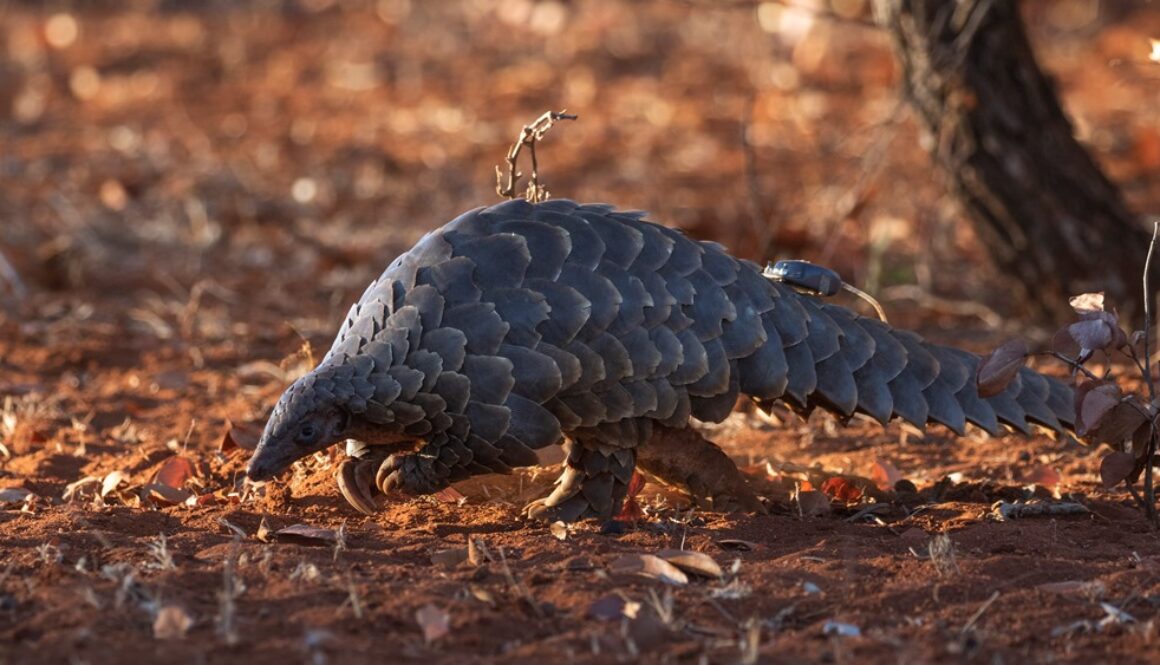
On one particular Friday morning not too long ago, Professor Ray Jansen from the African Pangolin Working Group fitted both pangolins with GPS trackers (costing close to R30,000), to ensure their safety and well-being.
After many days of planning we arrived to pick them up (no small task) and began our long drive to freedom to an undisclosed location. Once we arrived we set up camp and scouted the area for the best termite mounds and ant nests around and began what in the animal rehabilitation world is called a ‘soft release’ process.
We opened the boxes and off they went, trundling into the darkness with us in hot pursuit, maintaining a distance far enough to make them comfortable but close enough to make sure we didn’t lose them! To help us in our struggle to keep track of them, we fitted reflective bicycle lights onto their scales (which we later removed) that emitted a constant dull light for us to follow. Like ghosts in the darkness.
With the radio telemetry tracking device and aerial in hand, along with our backpacks stocked with food, torches, spare batteries, a GPS and absolutely no signal on our cell phones, we each set off into the star-lit dark of the African wild.
In an area home to hippos, leopards and buffalo, we cautiously followed the pangolins as they effortlessly walked on their hind legs over rocky terrain, down steep inclines and into deep drainage lines. There was no shortage of spiders and their webs for us to walk through as we attempted to navigate our way through the thick and spiny vegetation in pursuit of two very (unfortunately) fortunate little beings.
Watching them snuffle around the dark, the wild smell in their noses once more, their intelligent little black eyes lit up and you could see their visible excitement.
After a few days of constant observation we removed their reflective bicycle lights and that night they wandered off alone, truly wild once again.
Of all the animals I’ve ever worked with there have been none as mystifyingly captivating as a pangolin.
Partly due to their bizarre appearance but also due to their personalities and helplessness. For millennia these animals have thrived with one of the simplest yet most effective defences of any animal on the planet: rolling up into a protective ball of hard scales. It protects them from the jaws of lions, hyenas, and leopards, but it can’t protect them from us. A defence that once protected them from the planet’s most fierce predators has, in a few decades, become completely redundant. People who come across them simply pick them up and put them in a bag. They don’t bite, they don’t attack, they don’t even try to run away. A creature that has been perfected by time has ultimately been defeated by its own defence.
It is painfully ironic but is also a poignant sign of our involvement in the destruction of our planet’s wildlife and wilderness areas, and a reminder of how badly they need our help, how much they deserve our help.
There may be many that slip through our open hands, but the tireless efforts of the employees and volunteers at each respective group has been absolutely awe-inspiring to witness as well as saddening as the donations and support dwindle, with the future of a species on the line.
As we head into the Christmas season please keep these little guys in your thoughts as well as the groups dedicated to protecting them. I want to ask each and every one of you to challenge yourself to make at least one small sacrifice for the vulnerable and the helpless.
Whatever it is, it will be a positive step towards pangolin conservation and protection, whether it’s a potential sponsorship, a small donation or a simple thank you to those who will be working tirelessly throughout the Christmas season and into the New Year to save a species that is, in my opinion, well worth saving.